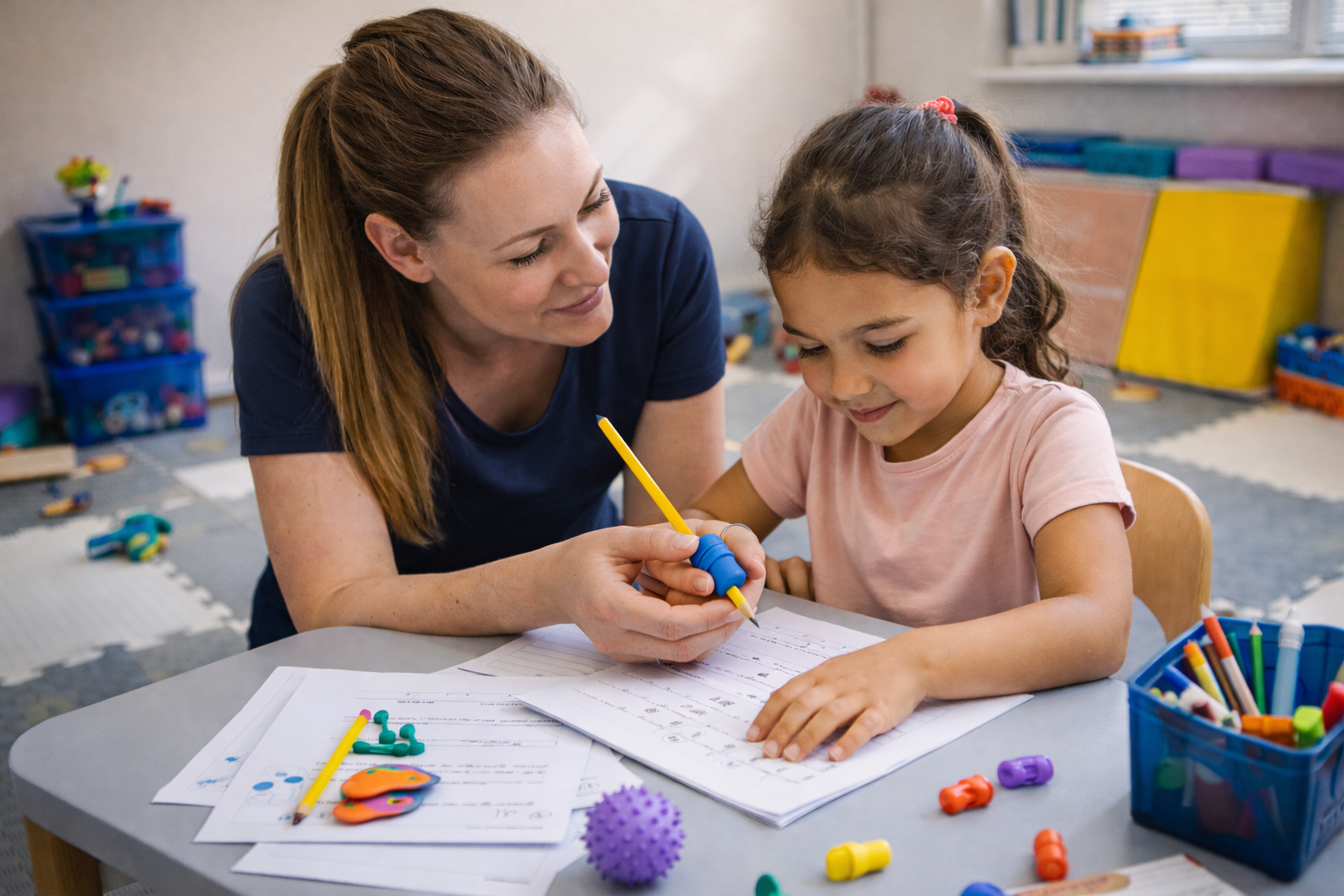
At Allied Kids Therapy in Melbourne, we often speak with parents who are thinking carefully about how best to support their child during this time. The good news is that school holidays can be one of the most effective times to focus on therapy, particularly when it comes to maintaining momentum and building skills.
The key isn’t adding pressure. It’s about giving families more choice and flexibility in how therapy fits into their child’s life.
Below are three ways many families use the school holidays to support their child’s development.
Why Continuity Matters in Therapy
Before exploring the options, it helps to understand why continuity of therapy can be important for many children.
Children with developmental delays, autism, intellectual disability, or other support needs often build skills through repetition, reinforcement, and consistent practice. These skills might include:
- School readiness abilities
When therapy pauses for long periods, it can sometimes mean that:
- Newly learned skills are harder to retain
- Routines become disrupted
- Progress takes longer to regain once therapy resumes
School holidays provide a unique window where children often have more energy, fewer academic pressures, and more time to practise skills in meaningful ways.
For many families, this makes the holidays an ideal time to focus on development in a relaxed environment.
- Holiday Intensive Therapy Sessions
One option some families choose during the school holidays is therapy intensives.
An intensive program simply means condensing multiple therapy sessions into a shorter timeframe, allowing children to practise skills more frequently across a few days or weeks.
This can be particularly helpful when working on goals such as:
- Communication development
- Emotional regulation strategies
- Social interaction skills
- Motor planning or coordination
Because sessions occur closer together, children can often build momentum more quickly. Skills that might normally take several weeks to reinforce can sometimes be practised more consistently within a shorter period.
For many children, the holidays also allow therapists to use more flexible and play-based approaches, such as:
- Games that support communication
- Role-play and social scenarios
The goal isn’t to create a “boot camp” style experience. Instead, intensives are designed to be engaging, motivating, and tailored to the child’s interests.
Parents remain closely involved in the process so strategies can continue at home.
- School Readiness Check-Ins
For families with children transitioning into kindergarten, prep, or a new school year, the school holidays can be an ideal time for a school readiness check-in.
These sessions focus on the practical and emotional skills children use every day at school, such as:
- Transitioning between activities
- Sitting and attending during tasks
- Independence with daily routines
A school readiness check-in can help parents understand:
- Which skills are developing well
- Where their child may benefit from additional support
- Practical strategies that can help ease the transition back to school
Importantly, these sessions are not about assessing whether a child is “ready enough.” Every child develops at their own pace.
Instead, the aim is to identify helpful supports early, so children can return to school feeling more confident.
Many parents find these sessions reassuring, as they provide clear, practical strategies that can be used both at home and in the classroom.
- Holiday Progress Sessions
For families who prefer to keep therapy at a steady pace, school holidays can simply be a time for progress-focused sessions.
Without the demands of school timetables, children may find it easier to:
- Engage in longer sessions
- Practise skills in different environments
- Participate in activities that mirror real-life situations
Holiday sessions can also allow therapists to focus on functional skills that naturally occur during the break, such as:
- Navigating community settings
- Managing routines at home
Because therapy can take place in a more relaxed setting, children often experience less fatigue and more opportunities to practise new skills.
For some families, this continuity simply helps maintain the progress their child has already worked hard to achieve during the school term.
Parents Stay in Control
One of the most important things to remember is that there is no single “right” way to approach therapy during the holidays.
Every child, every family, and every routine is different.
Some families choose:
- A short therapy break to recharge
- One or two sessions to maintain progress
- A structured intensive program
- A school readiness review before the next term
What matters most is that the approach works for your child and your family.
Therapy should always feel like a partnership between parents and clinicians, where goals are guided by what you believe will support your child best.
The School Holidays as an Opportunity
School holidays don’t need to mean pressing pause on progress. For many children, they can be a valuable time to:
- Prepare for upcoming transitions
With the extra flexibility the holidays provide, therapy can often feel more relaxed, more engaging, and more connected to everyday life.
For families in Melbourne working with Allied Kids Therapy, the holidays can simply be another opportunity to support your child’s development — in a way that feels right for you.